———————————————————————————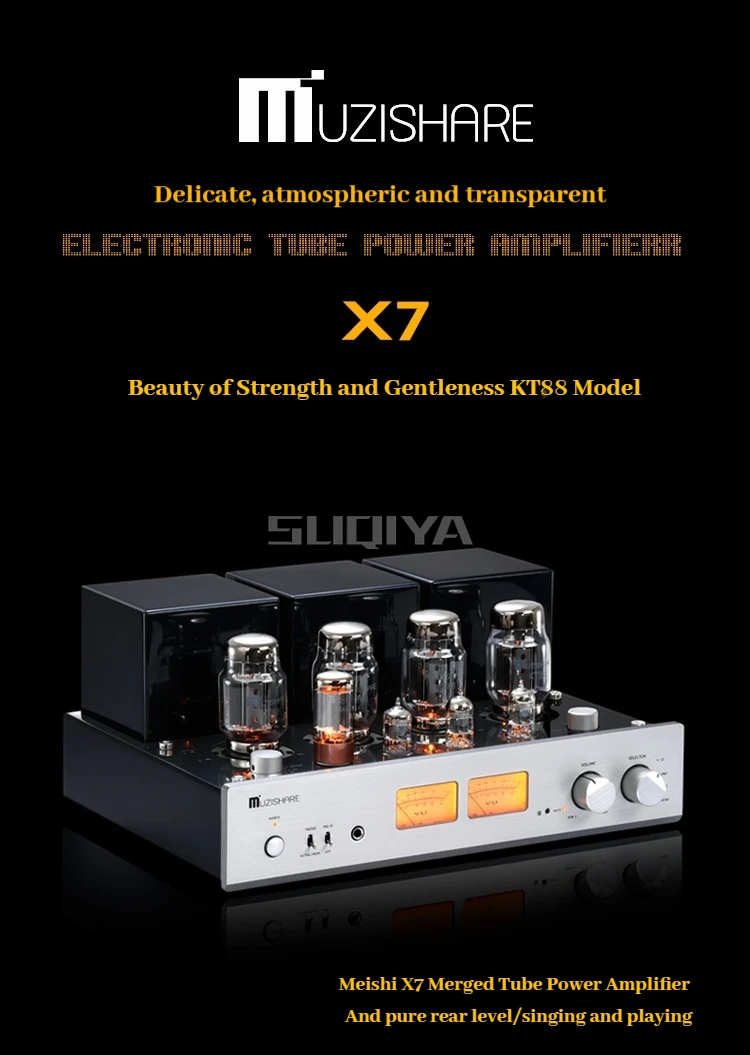

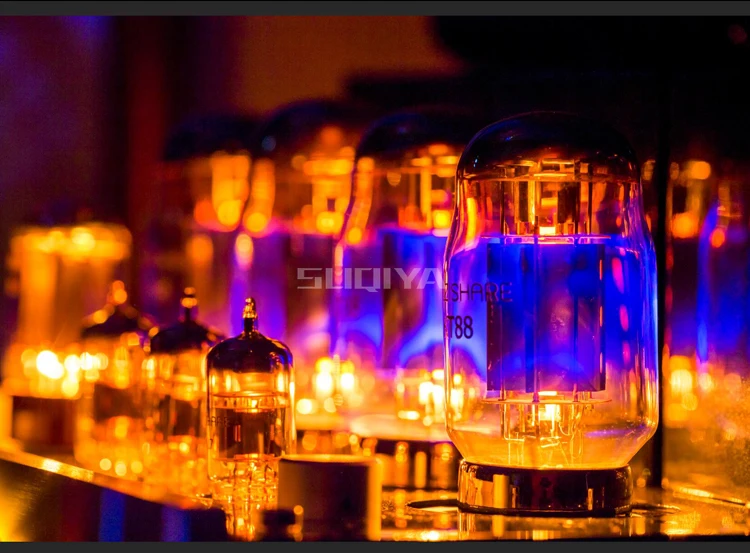
X7
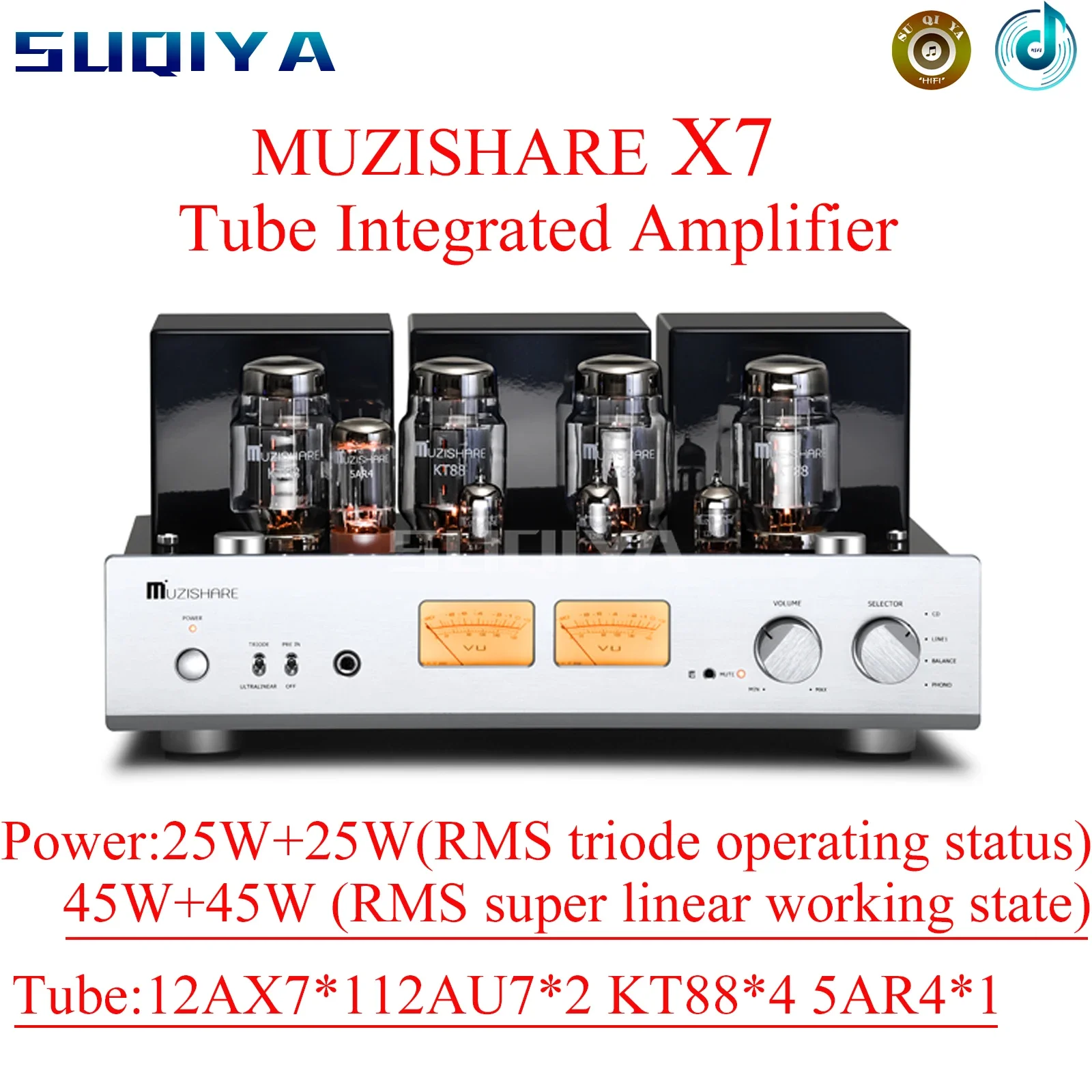
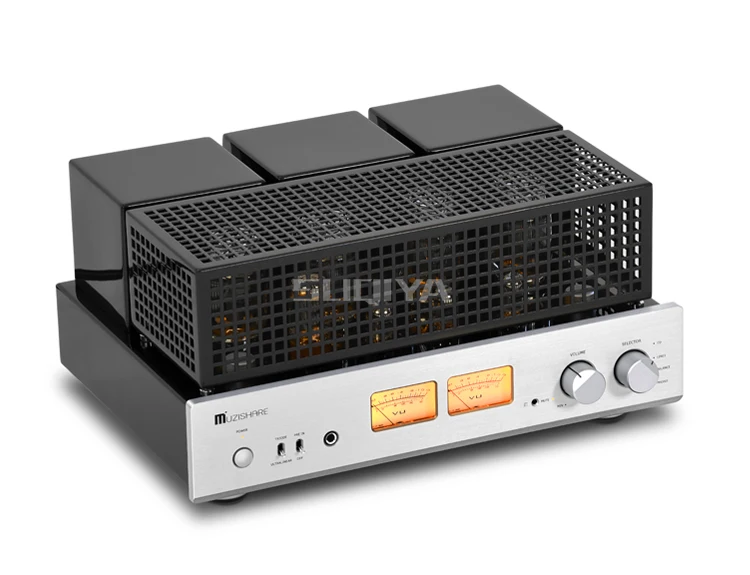
Meishi X7 dual high-voltage tube rectifier pure tube amplifier/with pure post-stage/phono preamplifier/balance
Noble, grand, tender, dynamic and static, strong sense of power
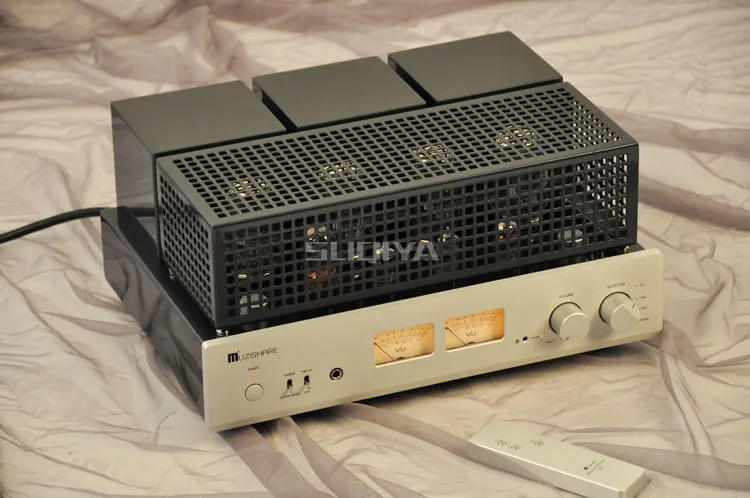
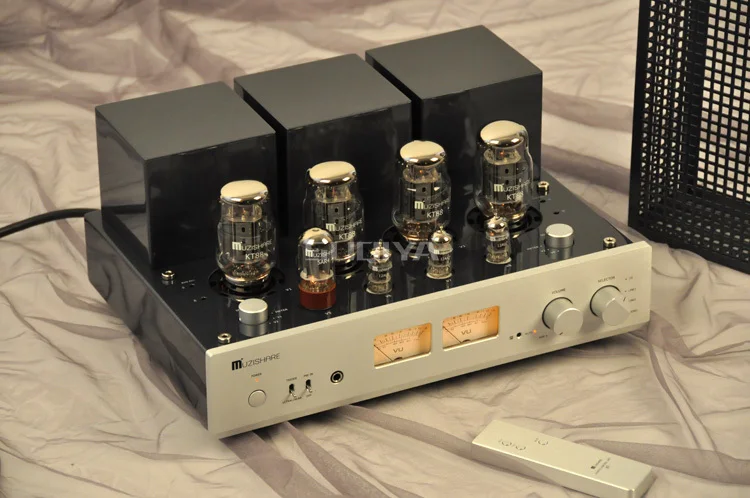
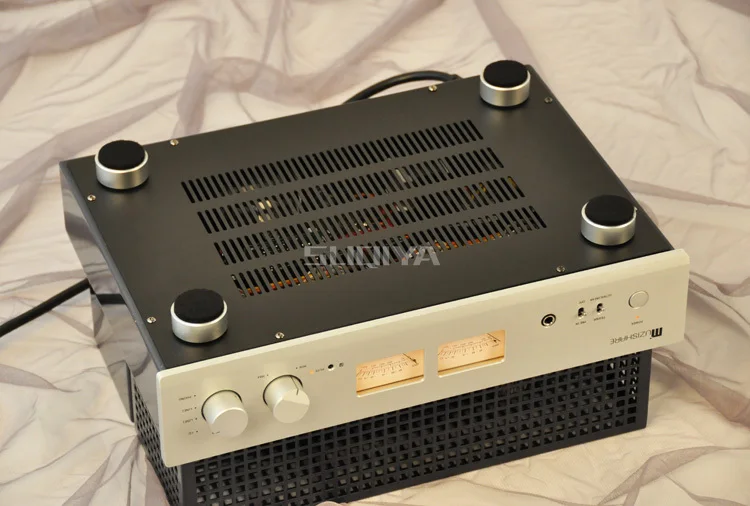
Imported Z11 iron core polar isolation transformer and imported EI iron core high-performance broadband output transformer are used; American 12AWG single and multi-strand fever wires are used for connection. Polar isolation transformers effectively alleviate the impact of current, making the low-frequency bounce and control stronger and the imaging more abundant. The machine uses original imported customized components.
5AR4 has real tube rectification overload protection, balanced tube life, strong tube flavor, and unique dual high-voltage circuit design.
12AX7 high-gain pre-stage tube, which is 100 times the gain coefficient of ordinary 6N3, 6N8, etc., and the sound is more vivid and fresh.
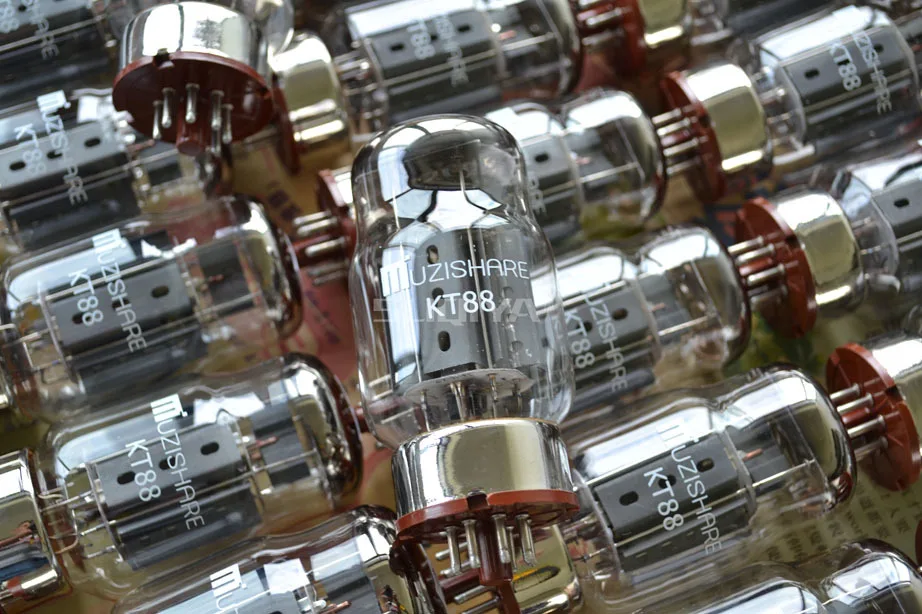
4 KT88 tubes are driven by the post-stage, with high voltage resistance, full and calm sound, sharp momentum, open and delicate, and extremely strong and powerful low frequency, which can easily cope with symphony and other large speakers.
Equipped with BISA current indicator and external BIAS ADJ adjustment function, it is convenient to monitor the working status and adjustment of the power tube; dual-function level meter display, the pointer swings with the music, full of dynamics.
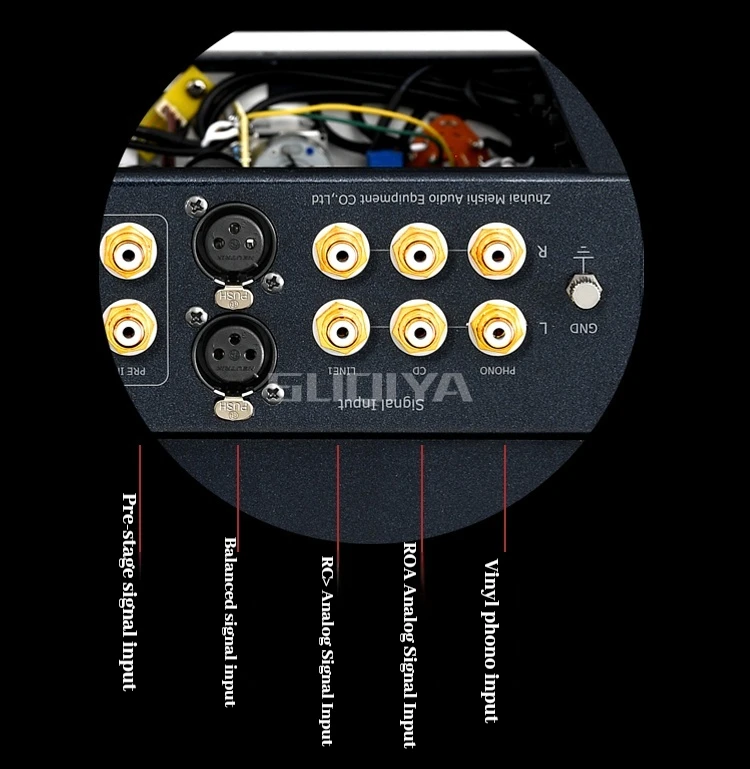
With MM phono amplifier, it is convenient for you to appreciate the LP analog sound, with the function of random switching between the combined machine and the pure post-stage, it is full of power and is worth playing for experienced players.
The headphone output is directly output by the output amplifier, and the sound quality is due to the unique core technology of the X7 output amplifier, which is beyond the reach of ordinary independent headphone amplifiers.
If the X5 is said to have the unique roundness, fineness, analytical power, and delicate elegance of the EL34, the X7 reveals the rare grandeur, fullness, richness, openness, and power of the KT88 output structure amplifier.
——————————————————————————————————————————
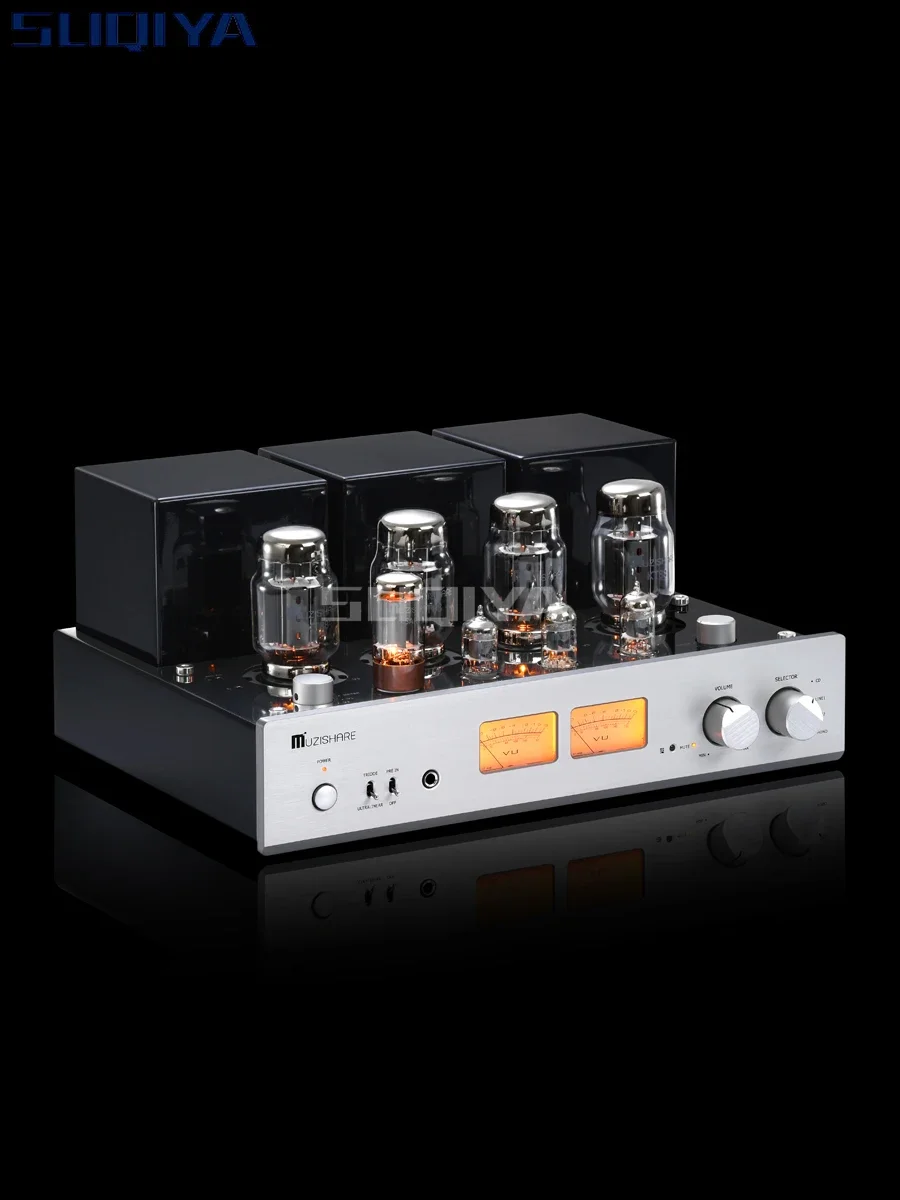
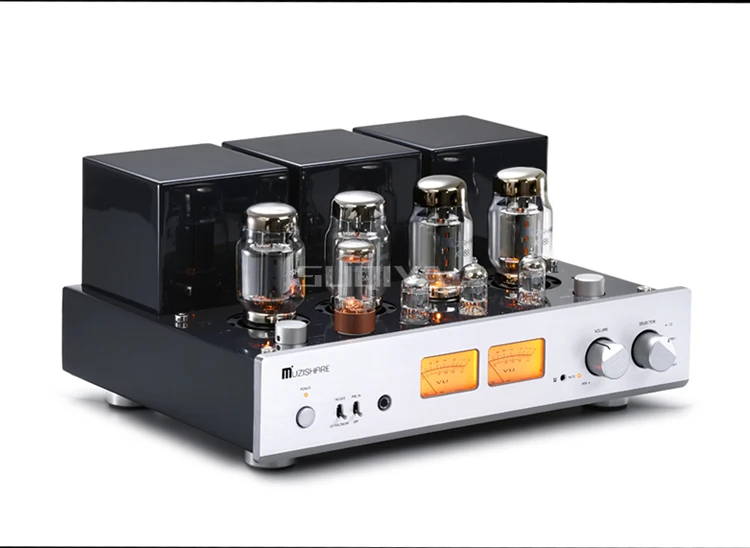
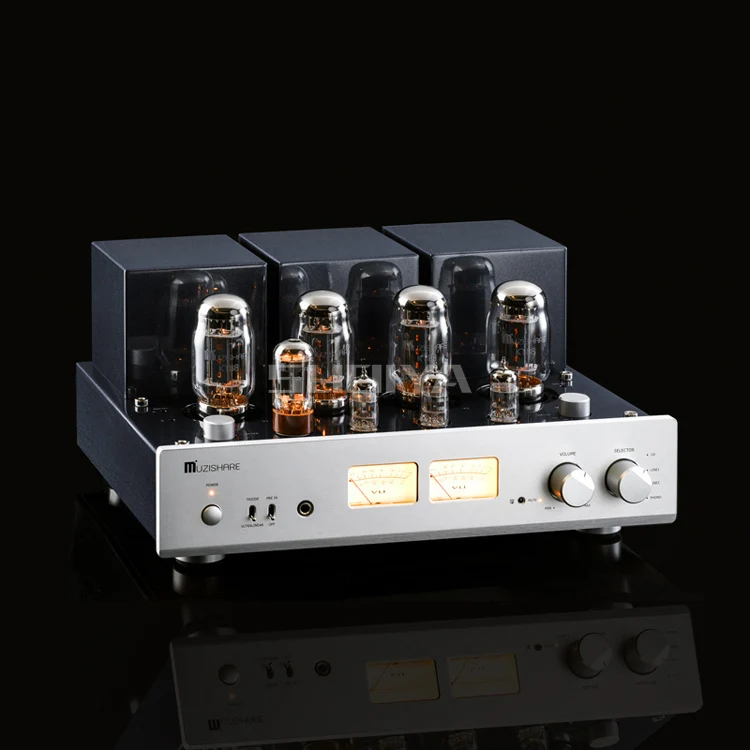
Looking at pictures is far more intuitive than describing in words, but the X7 still gives people a shocking feeling. This shock comes not only from the huge size of the X7, the noble and exquisite shape, the bright craftsmanship of the fuselage, the design layout of the panel like a precision instrument, and the paint craftsmanship comparable to that of a million-dollar high-end car, highlighting its nobility. The specially customized dual-head multi-function professional-level output power meter and ammeter indicator head are usually used in professional high-precision instruments. After turning on, a soft orange backlight is revealed. When working, the two pointers wave with the music, which is very dynamic and charming.
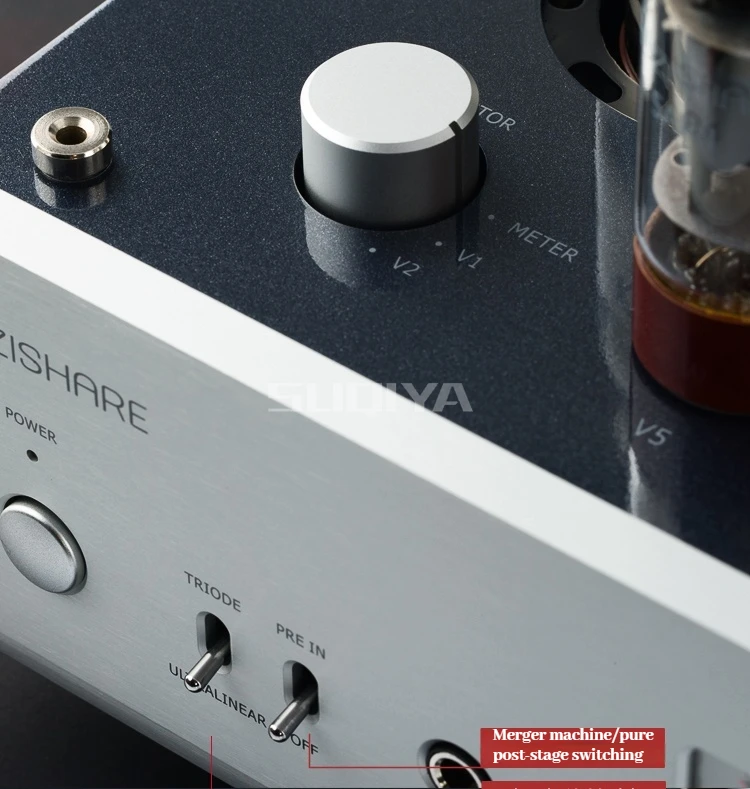
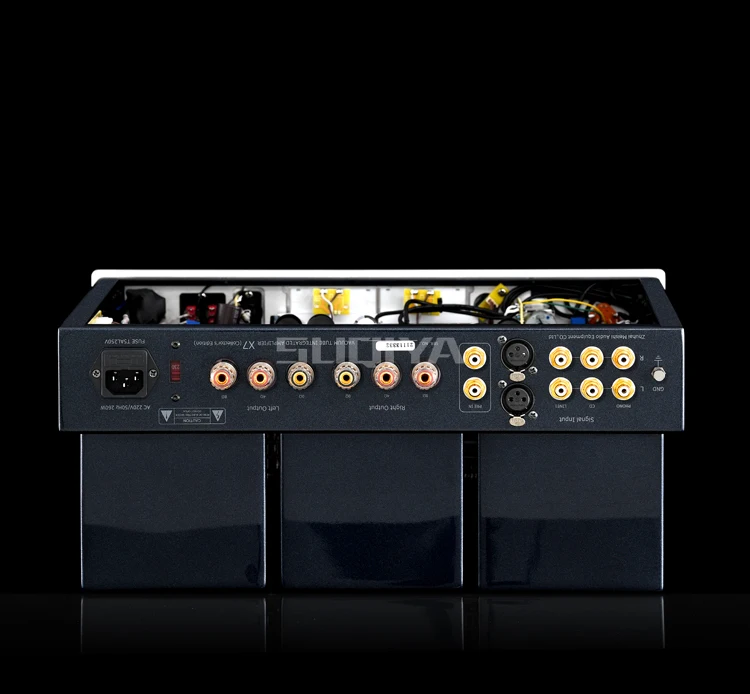
Various finely crafted switches and knobs are arranged in an orderly manner on the X7 panel; the two silver knobs on the right with high-gloss sand plating are respectively for volume adjustment and source input selection, and the mute indicator light and remote control receiving window are on the side; the left area of the panel is the power switch and working status selection gear, including the power selection gear for switching between the three-stage tube connection method and the ultra-linear connection method and the combined/pure post-stage function selection gear. Users can switch at will according to their listening preferences and the acoustic conditions of the environment to achieve outstanding listening effects.
The X7 high voltage link adopts LCπ filter design, which is composed of two electrolytic capacitors provided by Nichicon of Japan, and a secret choke with current and inductance values of 350ma and 450mh respectively. The designer arranged a 5AR4 side-heated full-wave rectifier tube and two rectifiers for the high voltage link of X7. This practice is rare in audiophile equipment. It is not as simple as simple rectification of the same type of machine. A lot of work needs to be done in the circuit structure. There are two levels of high voltage power supply, and the load margin of the transformer must be sufficient. This should be the reason why the production cost of the power transformer on the current KT88 type machine is relatively high. The sound performance can intuitively feel the low-frequency power of X7. Even the most difficult to drive closed box can be firmly grasped and sonorous;
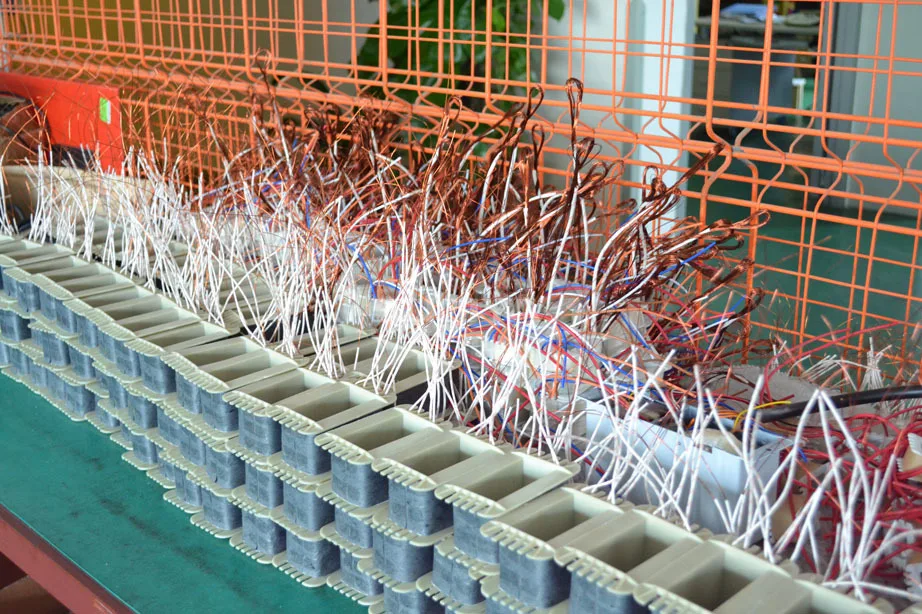
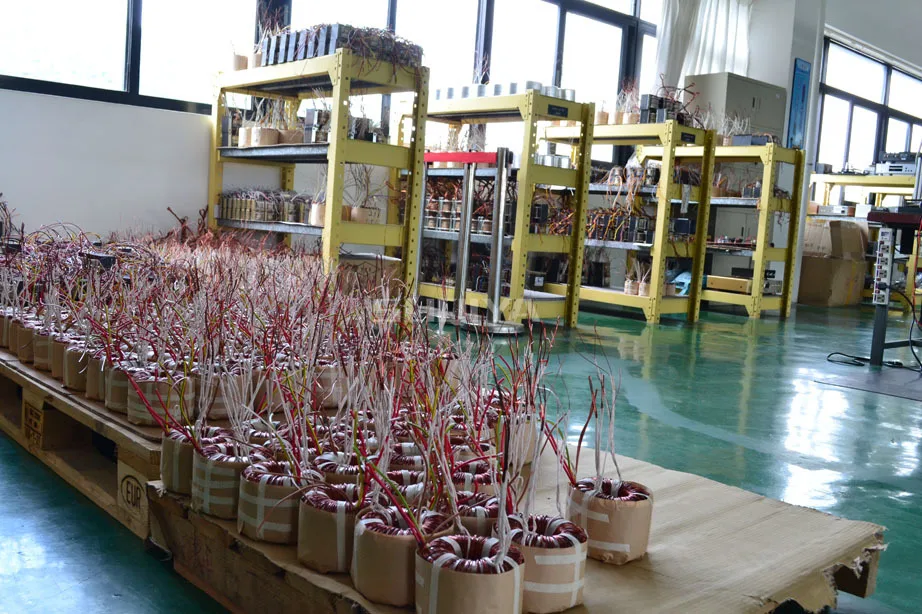
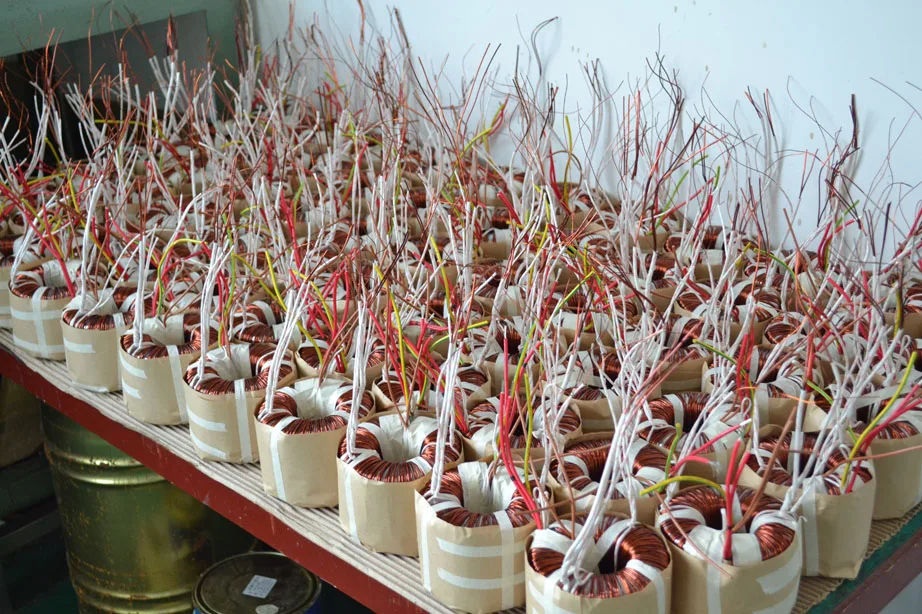
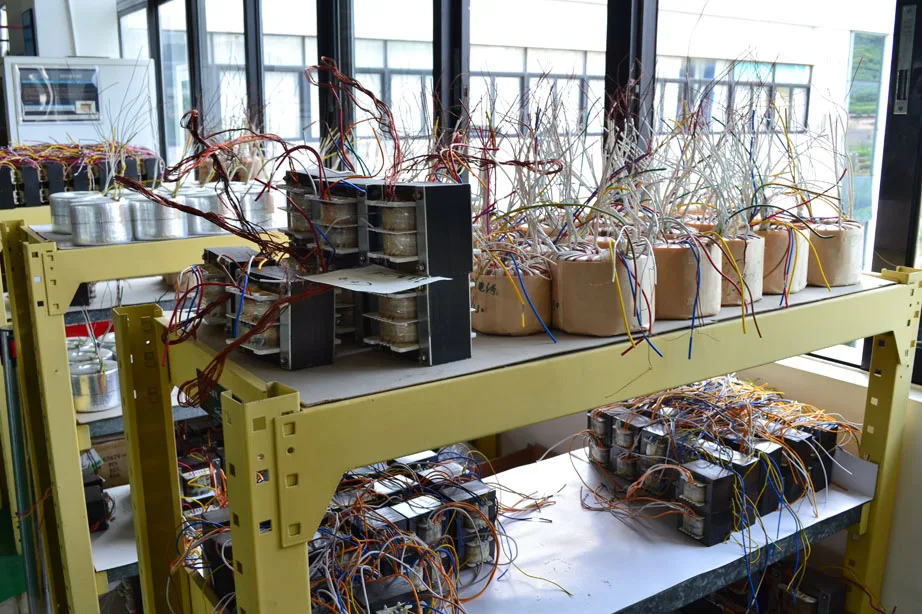
The audio transformer is the soul of a tube amplifier. The reason why McIntosh tube amplifier is unique is that The X7 audio transformer is made entirely by hand using a high-precision, low-leakage, ten-layer cross-winding method and imported EI silicon steel sheets with a variety of mixed annealing technologies. This transformer has the advantages of good wide-band response and very low distortion, which is similar to the McIntosh transformer. The primary inductance is as high as 210H (4.5KΩ50HZ), the primary leakage inductance is only 3.95mH, the distributed capacitance is as low as 100Pf, the frequency response is as wide as 5Hz-150KHz (-3db), and the primary resonance frequency is as high as 240KHZ. An excellent model often requires Years of experience, material selection, and use of materials, and after several years of matching different equipment, the sound effect is finally established; the reborn performance of the sound also depends on the designer's many attainments in the selection of materials for the production of large components such as power transformers and output transformers, which can also be simply called "material science". The production technology of transformers is as important as the human heart. Excellent transformer production technology often achieves twice the result with half the effort in terms of sound effect requirements; the selection of the power transformer of the X7 adopts the current superior Japanese Z11 silicon steel sheet after professional annealing treatment technology + Ohno Continuous Casting (OCC single crystal copper for short) and is wound through a special process structure. The output transformer is two Japanese EI iron core transformers with a strong flavor, and special materials such as mineral sea sand and resin sifted from the coast of the Golden Beach of the South China Sea are added and fused at high temperature. The imaging power, density, low-frequency bounce force are rich and natural, the details are extended, the audio frequency band is wide and relaxed, and the sound performance is transparent, smooth and delicate without being dry. This kind of complex technical content is often beyond the comprehension of ordinary non-professional users, which is why cheap tube amplifiers are super cheap and expensive ones are so expensive that they are luxurious.
The X7 has a wide output current for the final amplifier, and can choose between super-linear connection and three-stage connection, which provides players with more choices. When paired with a box with high sensitivity that does not require high power to drive well, choosing a three-stage connection with a smaller power output can obtain a more delicate and sweeter sound quality. For speakers that are more difficult to drive or have higher requirements for dynamics and sound field, using a super-linear connection can meet demanding requirements. In the three-stage state, the sound is soft, delicate, clear and sweet; in the super-linear state, the sound is grand, calm and full, and the control of the sense of hearing is more regular, and the sound field is clear, thick and powerful.
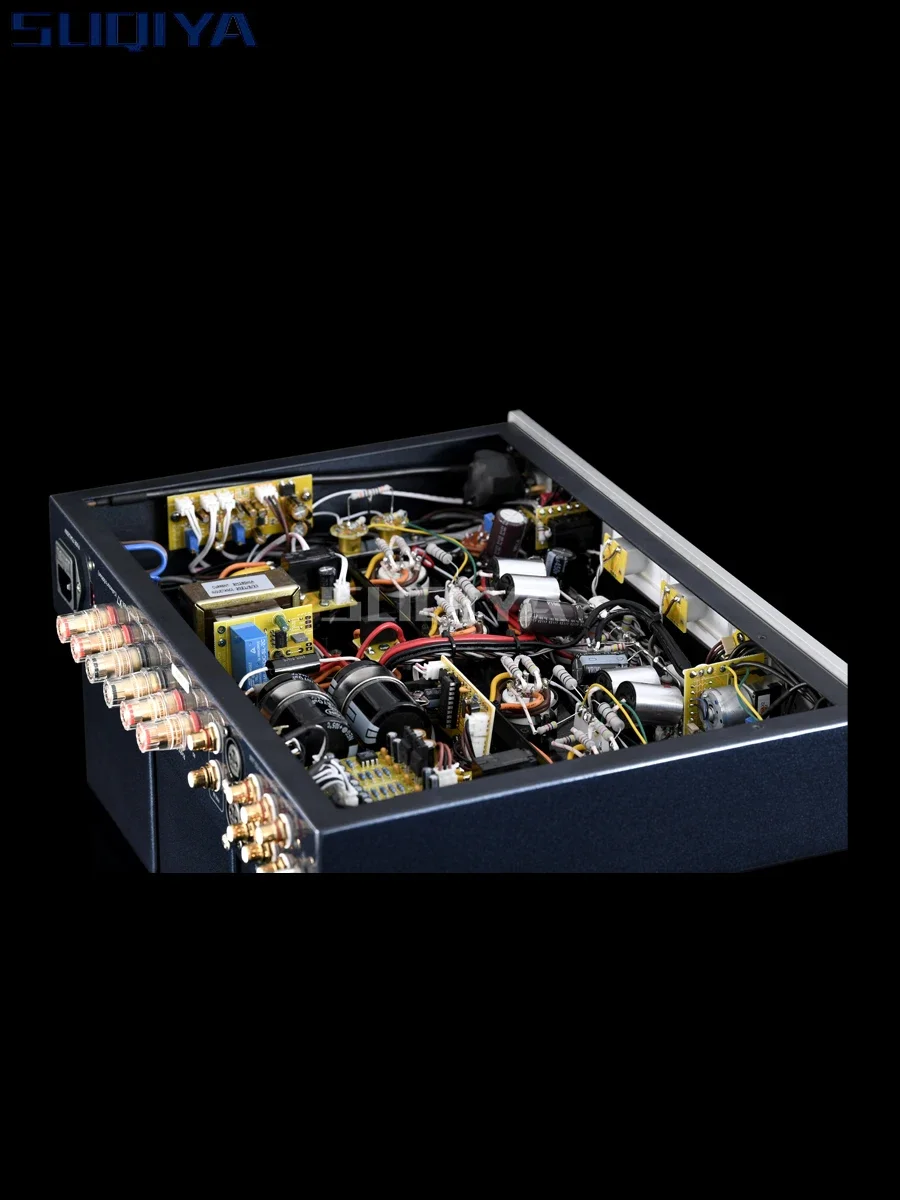
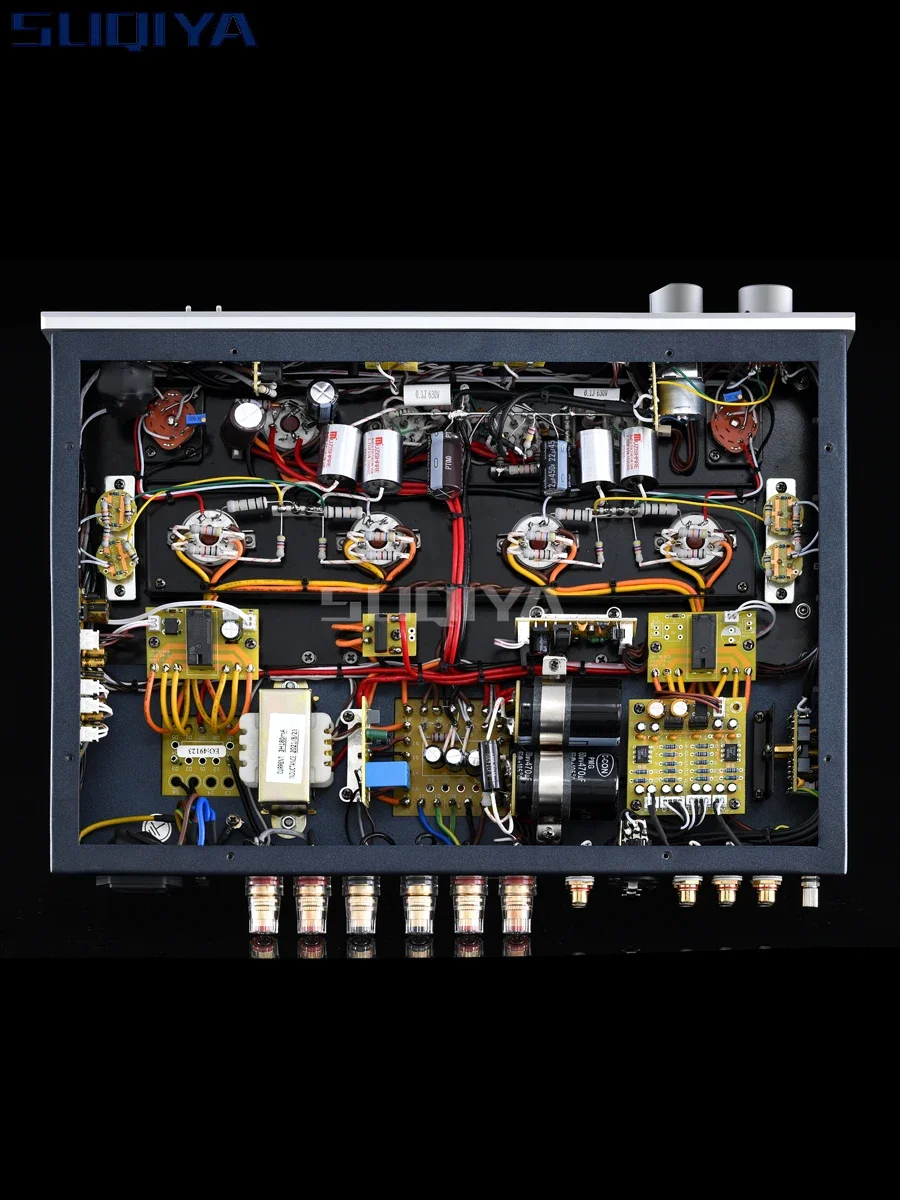
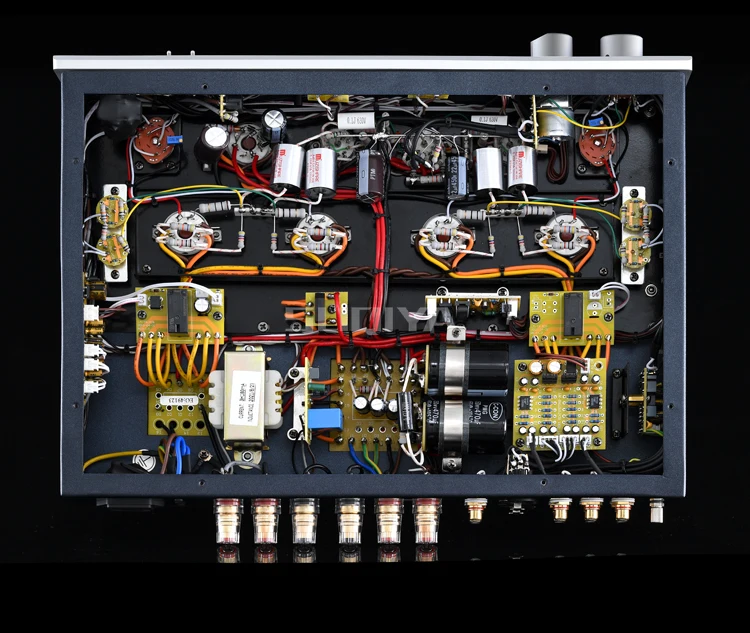
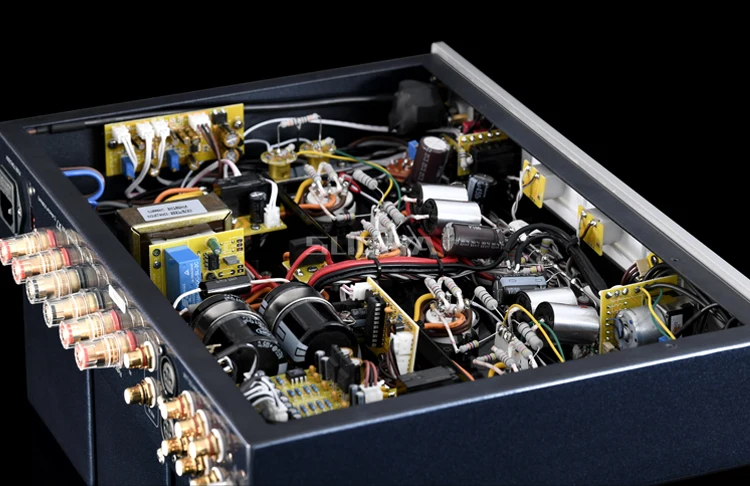
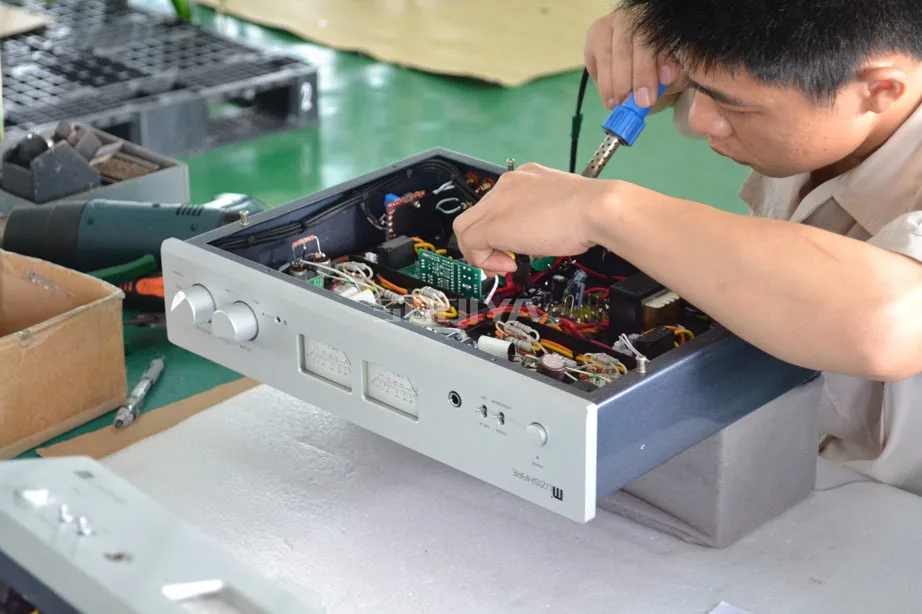
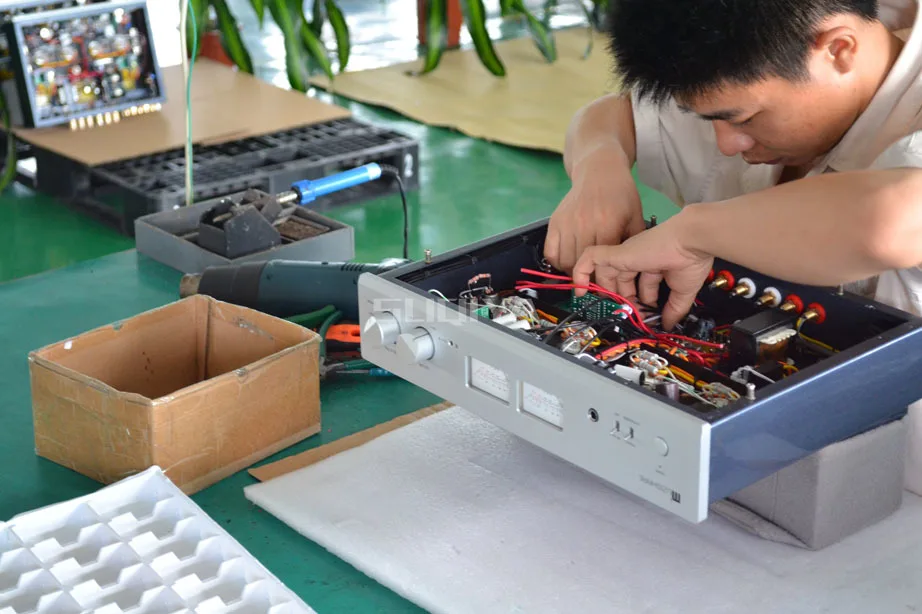
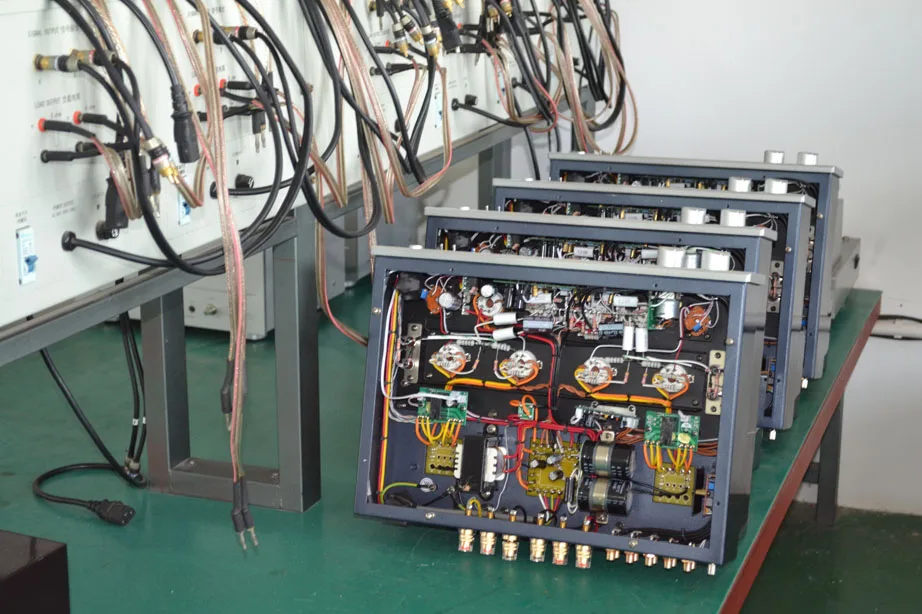
All components in the X7 are imported as always. The quality, stability and life of the components are far different from some crude, counterfeit and inferior products on the market. Opening the bottom platform with multiple rows of ventilation and heat dissipation holes, it is not difficult to find that the arrangement of various parts and the layout of the connecting wires in different links are all well-thought-out and clever arrangements, and the traditional point-to-point scaffolding method is used for welding. Even though the production hours and costs will increase significantly, the number of welding points can be reduced, which is beneficial to improving fidelity. The output stages of the audio pre-stage and the inverter stage respectively use a pair of 12AU7*2 and 12AX7*1 designed as early as the 1950s for high-fidelity playback for voltage amplification, and the final stage power amplifier output is KT88*4, with two push-pull AB1 class outputs per channel. The three-stage connection provides an output power of 25W*2, and the ultra-linear connection can output up to 45W*2. In terms of power supply, in addition to the large Z11 transformer, a high-inductance choke filter is also used, with a signal-to-noise ratio of up to 92DB. The pre-stage uses a 5AR4 tube rectifier, which is even rarer. The pre-stage input is amplified by the u value of 12AX7 in dual three-stage, and then driven by 12AU7 to form a complete pre-stage amplifier circuit and driving circuit structure. The post-amplifier part has two independent left and right rectifier circuits, plus two half-width power output transformers, giving X7 a strong driving force and high dynamic contrast.
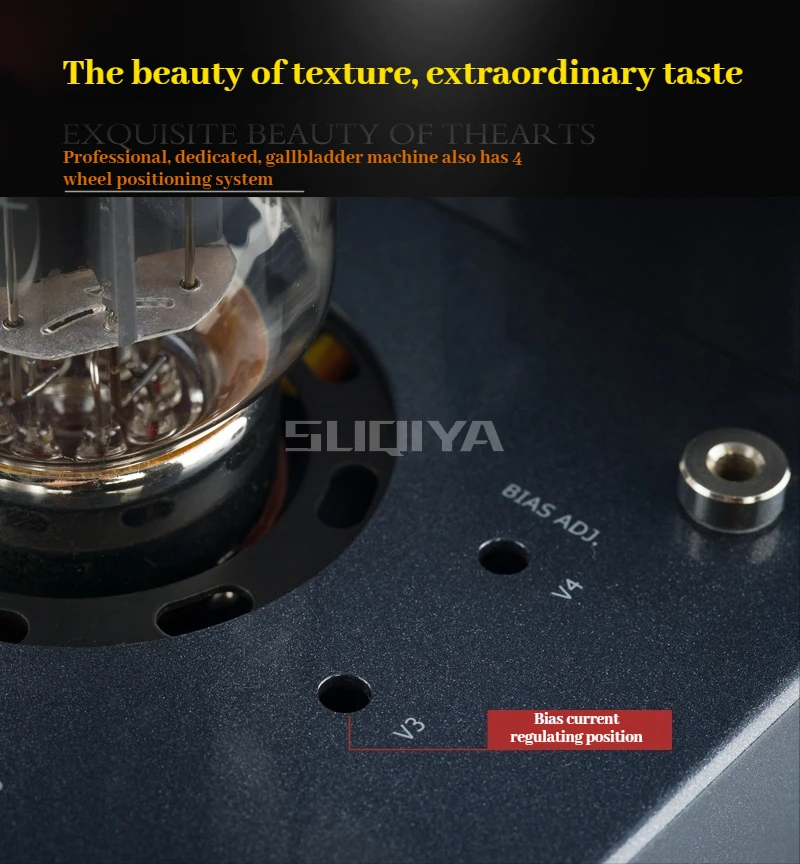
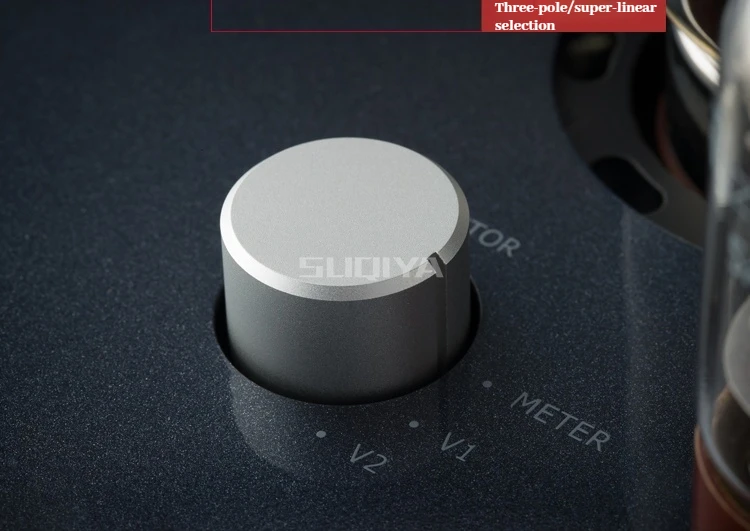
X7, as always, adopts a more scientific, humane, complex, and high-cost fixed bias, which takes care of the scientific rigor and precision of audiophiles. Since the working point of automatic bias depends on the internal capacitance balance value, the aging of tubes and components will inevitably cause the sound to deviate and fail to play the correct value of the tube; and fixed bias can be adjusted manually and mechanically according to the tube's own curve value to make the equipment reach the precise working point at all times, and the sound remains in a balanced working state. The user does not need to use a multimeter, but can directly switch the V1, V2, V3, V4 knobs on the chassis to observe the changes in the ammeter pointer on the panel, and adjust at any time to ensure a more accurate sound; the switch gears V1V2V3V4 correspond to the four KT88 tubes V1V2V3V4 at the back, reflecting the current changes of each tube. For example, if you need to adjust the V1 tube, turn the switch gear to the V1 position, which corresponds to the V1 tube. There are 4 BIAS on the chassis. ADJ. small holes, two on each side, are V1V2V3V4. Use a flat-blade screwdriver to gently twist the adjustable resistor in the hole and observe the change of the pointer on the panel. In the same way, adjust the current of the four tubes to the same position to keep each tube working at the same working point. The sound is more accurate, simple, scientific and easy to use; the X7 panel meter has a dual function of level display. When working, switch the gear to the METER gear, and the response is the level change of each channel. The pointer swings with the music, which is full of dynamics; this dual design is very humane and easy to operate. It is not only a functional instrument but also a precision monitoring instrument to ensure that the machine is in normal working condition.
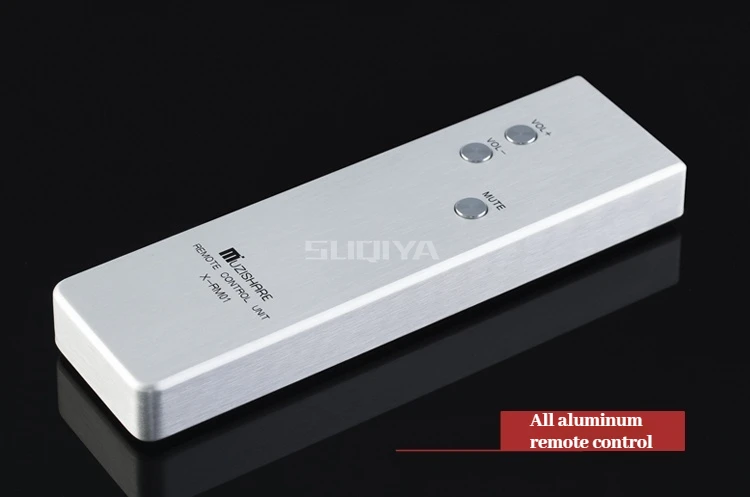
X7 has infrared remote control function. The remote control is made of solid pure aluminum, which feels very comfortable. It can adjust the volume and mute selection; the volume control uses a special Japanese original ALPS motor potentiometer. The entire volume attenuation process uses microprocessing to attenuate in 100 levels. Each level is processed separately with different value resistors, with an amazing accuracy of 0.7DB, ensuring the accuracy and balance of sound at different volumes, which is beyond the reach of general market components.
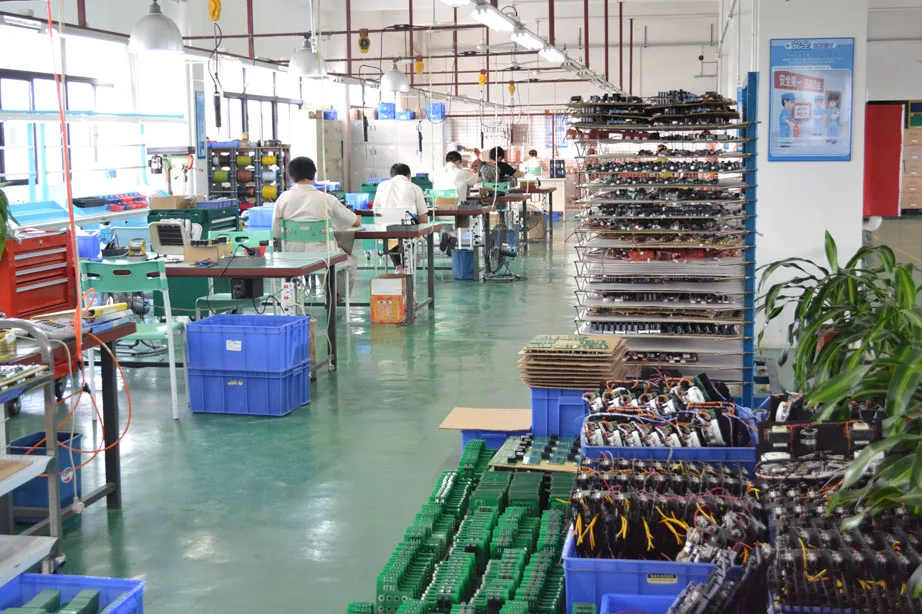
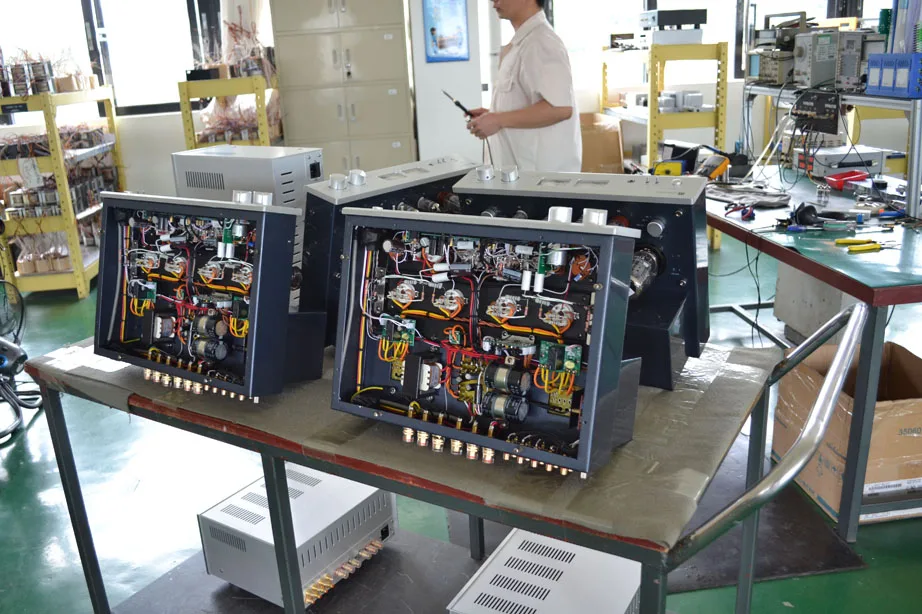
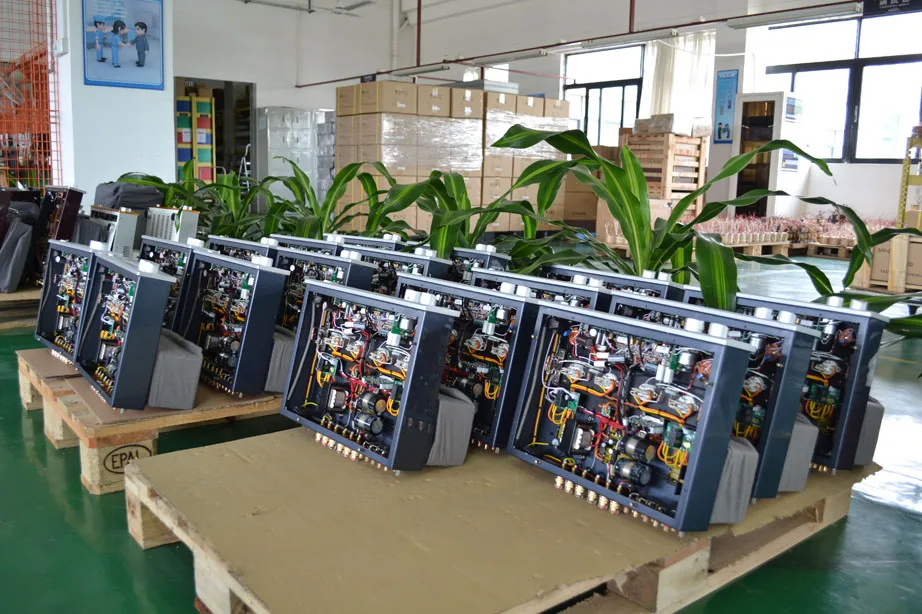
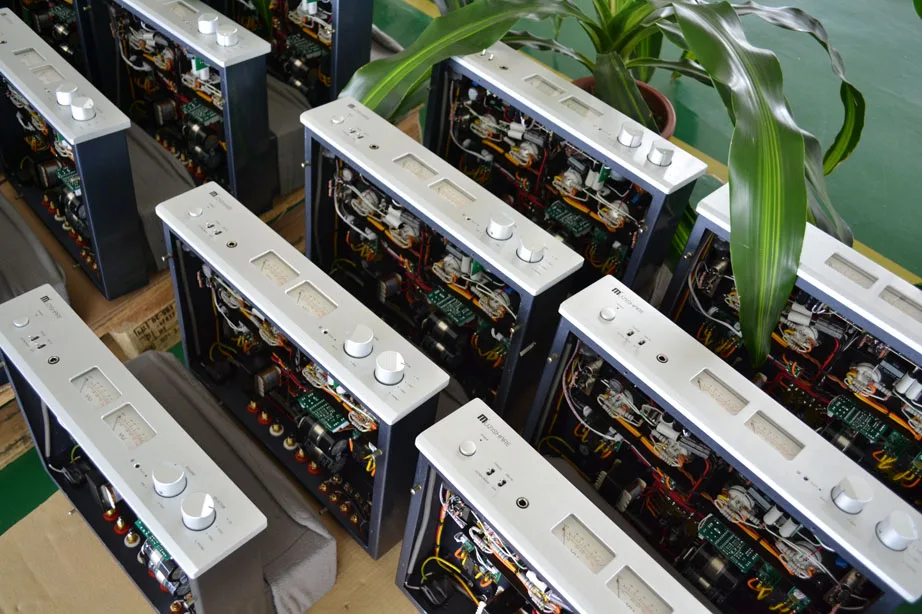
X7 adopts pure manual scaffolding welding technology, and adopts point-to-point full scaffolding welding technology with high labor cost and high process level requirements. The scaffolding copper rods are 6N copper rods, and the intersections of parts and copper rods are all wound and tinned. The layout is reasonable and beautiful, and the welding is skilled. Tube amp enthusiasts know that tube amp scaffolding is authentic, and it often sounds better than using circuit boards. The basic differences between scaffolding and circuit board production are analyzed as follows:
I don't know if enthusiasts have noticed that most high-priced audio equipment in the world claims to use scaffolding welding technology in publicity, especially high-priced tube amps, which almost all use this time-consuming and labor-intensive method, and abandon the commonly used printed circuit boards. The main benefit of doing this is to further improve the sound quality of the playback and make the routing between circuits more reasonable. Practice has proved that scaffolding welding is indeed more outstanding in sound expression. Therefore, it is also an experimental object for amateur enthusiasts to make their own products.
Traditional printed circuit board welding is the mainstream in the electronics field because of its compact structure, beautiful appearance, relatively small size, and easy mechanical welding. However, printed circuit boards use a layer of copper foil on an insulating board as a conductor, and the oxidation degree, N coefficient and thickness of the copper foil are all limited. For the sake of beauty and neatness, most manufacturers use computer layout design and drawing. The corners of their copper foil conduction paths are sharp, and the thickness is not completely consistent. The current does not flow smoothly through these places, and the resistance of the circuit board itself cannot be selected arbitrarily like the scaffolding style, and the capacitance component between adjacent copper foils cannot be made very low. Take the tube amplifier as an example. It is easy to produce sparks and discharges at sharp corners and copper foil parts close to high voltage on the circuit board, causing problems. Since the internal resistance and power supply voltage of the tube amplifier are very high, the partial capacitance between the copper foils of the circuit board will also affect it, and damage the transparency of the sound playback and other indicators. The gate leakage resistance of the gate is required to be connected to the input gate in the closest way, and it is better to directly weld it to the pin of the gate. The cathode resistance is also required to be grounded at the same point as the gate leakage resistance, and the potential difference between them is also reduced. This is difficult to do on a printed circuit board, but it can be easily achieved using scaffolding welding. In fact, not only tube amplifiers, but also crystal amplifiers have some drawbacks other than the above, and even have a great impact on the crossovers in the speakers and the connecting wires between the speakers. Now most of the crossovers of the speakers are made of printed circuit boards. Although they are neat and beautiful, the influence of conductive copper foil also exists. Because the crossover of the speaker often passes a large audio current, the cross-sectional area of the copper foil of the circuit board cannot be made too large, which will lose some power. Even if you increase the cross-sectional area to a certain extent, the quality of the copper foil has not yet been heard of a high purity of 6N to N. For the current concept of fever, it will more or less leave a little regret in the hearts of audiophiles.
The so-called scaffolding production is to directly jumper and weld wires of different quality and thickness at each connection point, or directly twist and weld by the lead of the component. Use thick wires for large currents and thin wires for small currents. Since there are insulation layers between the wires, short circuits will not form naturally. However, the technology of scaffolding production is relatively high and difficult. Attention should be paid to the direction of each wire, avoiding parallel arrangement that can produce coupling interference, and reasonably arranging the grounding points of the whole machine. The overall layout arrangement should be more intuitive, simple and shorter, and the effect will be better. Reasonable design can reduce the resistance of the circuit to a lower level, making the flow of current more unimpeded. Distributed capacitance can also be made very low in scaffolding welding, so that mutual interference is further reduced and the playback quality is improved. The highly skilled scaffolding welding is the best sounding AC tube radio, which is almost without exception made using scaffolding welding technology. The popular crystal radios and tape recorders are far behind it in terms of sound quality and timbre.
Since scaffolding welding production must rely on manual labor and superb technology, their manufacturing speed is many times slower than that of printed circuit boards, and the cost and price are rising, which is also an expected result.
There are also successful examples of hybrid production, that is, the product of the combination of printed circuit boards and scaffolding. The main body is designed and made with printed circuit boards, and the key parts are manually scaffolded and reassembled. In this way, costs can be reduced and efficiency can be improved without sacrificing the expressive ability of sound quality, which is also a smart approach. The famous audio brand Sonic Frontiers is one of the best examples.
In terms of timbre, the X7 has the distinct characteristics of the old-school British sound. The high-frequency part has a very high transparency, rich details, and excellent spatial and instrumental description capabilities. When listening to violin performances, the sound lines are slender and flexible, the texture is real and permeated with a sense of magnificence, the string sounds are melodious, and the resonance of the wooden cavity is enough to make people linger again and again; when replaying metal percussion music, it can clearly exude a clean luster, dynamic lingering, extended and smooth, and the micro-dynamics are not only energetic, clear and accurate, but also in the mid-frequency, the X7 maintains the British The unique richness of national voices, with a touch of freshness, can reflect the cohesive and sincere texture of both male and female voices. It is not overly delicate, but can give people a warm and natural enjoyment. As a pure tube amplifier with an output power of 45W, the X7 can fully drive all the big speakers on the market. You can feel its abundant energy, its dynamic impact is strong and powerful, the overall speed is moderate, and the control is steady and calm. It is especially suitable for replaying large-dynamic drum music and symphonic instrumental music. The low frequency is solid and deep, the texture is solid and elastic, and the transient burst is quite agile.
_______________________________________________________________________________________
Technical parameters:
Rated output power: 25W + 25W (RMS triode working state)
45W + 45W (RMS super-linear working state)
Harmonic distortion: 1% (1kHz)
Input sensitivity: 280mV; 520mV (pre in)
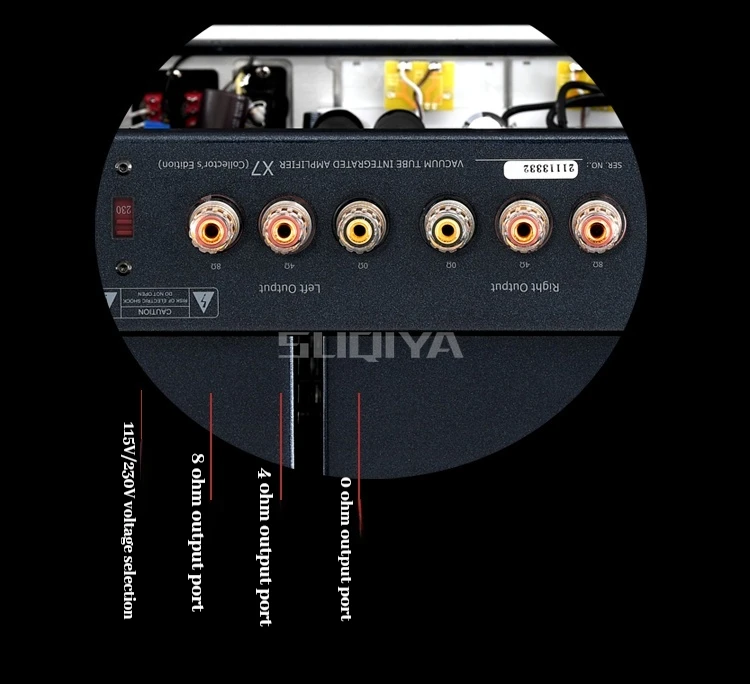
Input impedance: 100KΩ Output impedance: 4Ω 8Ω Signal-to-noise ratio: 92dB Left and right output balance: <0.5db
Weight: 25kg Power consumption of the whole machine: 260W
Vacuum tubes used: 12AX7×1, 12AU7×2, KT88×4, 5AR4×1
Volume of the whole machine (W×D×H): 410mm x 335mm x 198mm
Power supply voltage: ~110V/220V±5% (50Hz)
Working conditions: Temperature: 0℃~40℃ Humidity: 20%~80%
Storage conditions: Temperature: -20℃~70℃ Humidity: 20%~90%
______________________________________________________________________________________
Features of this machine:
1. Purely handmade, the whole machine adopts scaffolding welding
2. Two high-quality wide-band high-quality Japanese EI output transformers are used
3. A high-power Z11 iron core ring power transformer specially designed for this machine is used
4. The voltage amplifier and drive stage use 5AR4 as tube rectifier power supply
5. 12AX7 and 12AU7 vacuum tubes are used for voltage amplification and reverse drive, and KT88 vacuum tubes are used for AB1 push-pull power amplification; triode and super linear selection functions are provided: triode working mode, the sound is soft, pure and smooth, suitable for enjoying vocals, string music and other types of music; super linear working mode, the sound is open, unrestrained, and has good momentum, suitable for enjoying large-scale, dynamic and other types of music.
6. External power tube current adjustment knob and current display meter
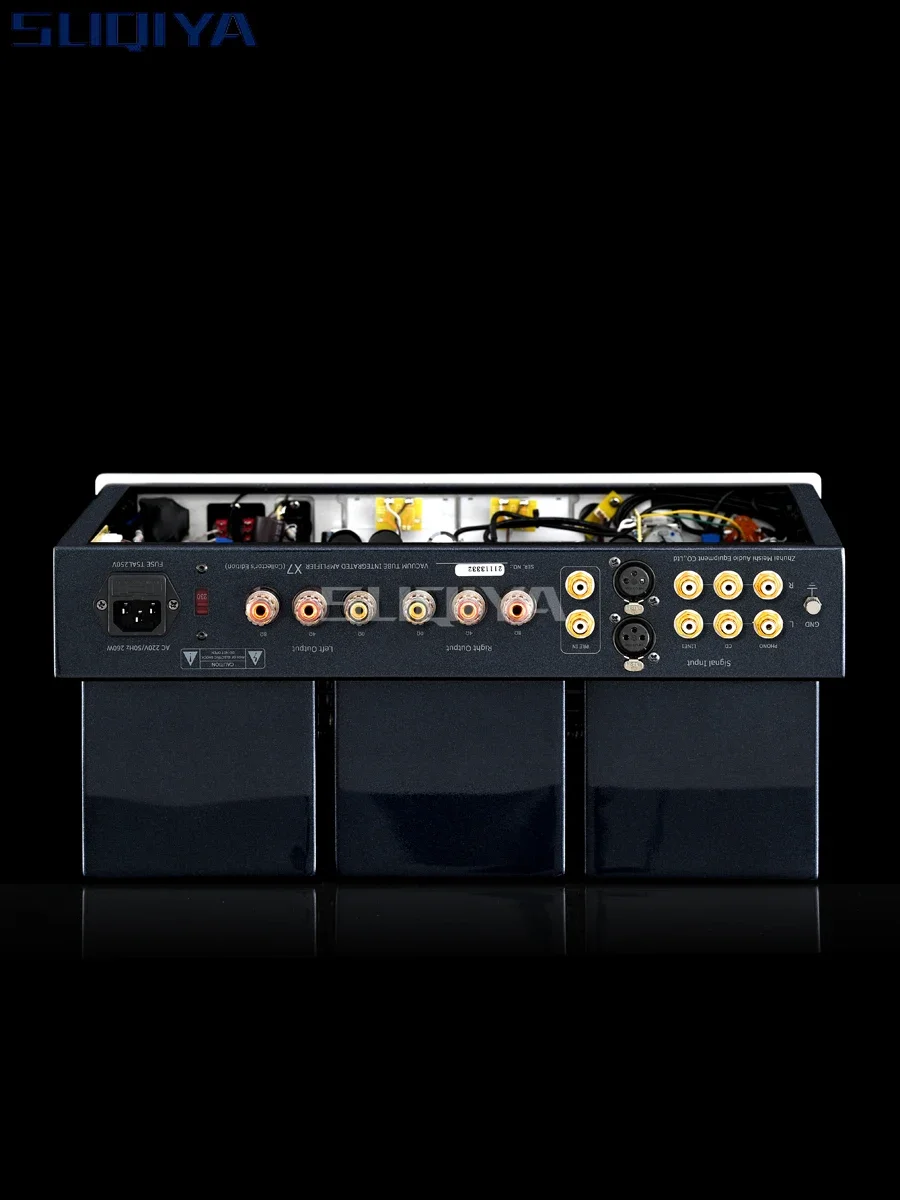
7. With pure post-stage function, can be connected to independent pre-stage signal input
8. With phono function, can be connected to vinyl record player
9. With true balance input port, richer musicality and details
10. Infrared function remote control
11. Power-on mute delay function (about 30 seconds)
12. Select Japanese ALPS motor potentiometer
13. Easy-to-install plug-in vacuum tube protective cover
|
The vacuum tube model used in this machine |
Replacement vacuum tube model |
|
12AX7 |
12AX7EH,ECC83,E83CC,CV4004 ECC803,5751 |
|
12AU7 |
12AU7EH,ECC82,5814,6189,CV4003 |
|
KT88 |
KT88EH,6550EH,6550,6550A |
|
5AR4 |
GZ34 |
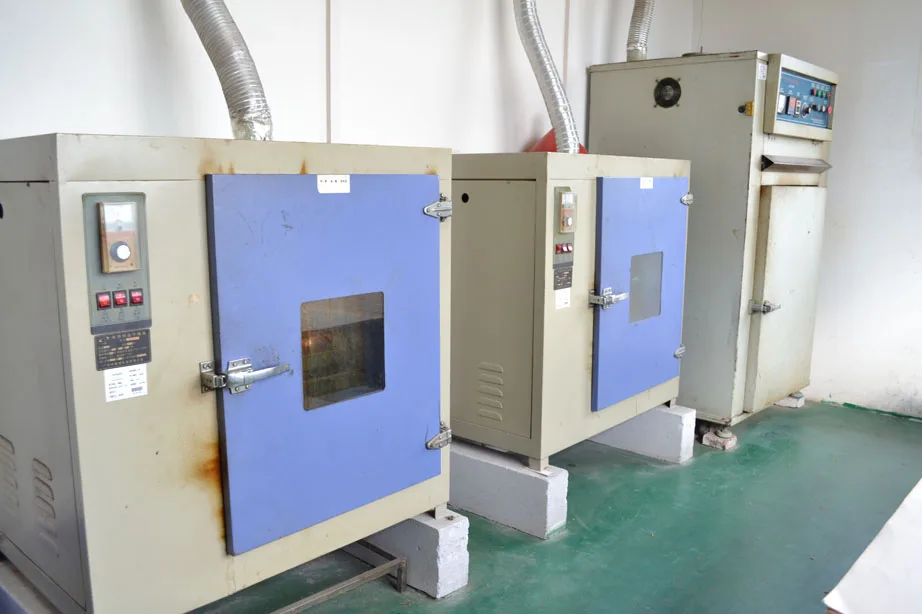
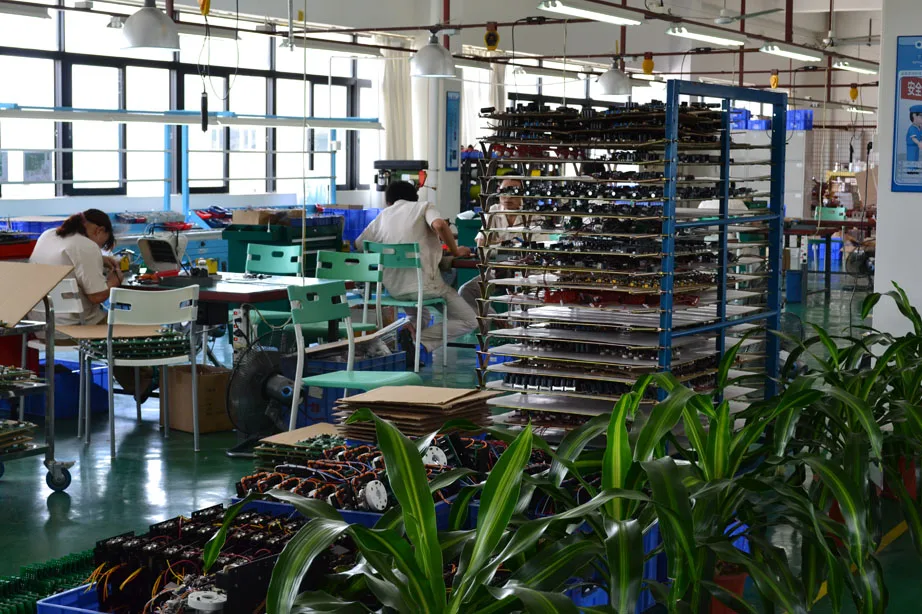
Manufacturing site:
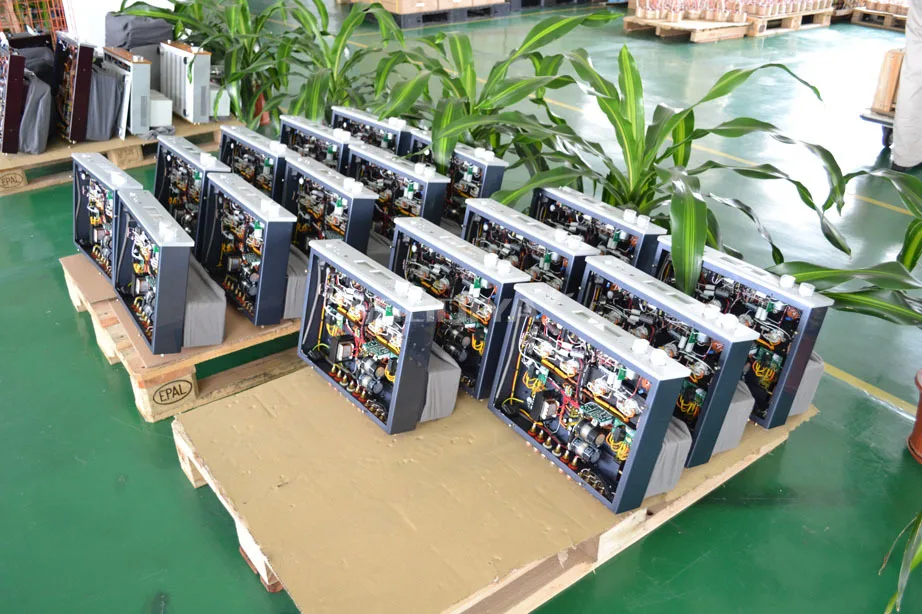

Note: This product does not include power cord.


Reviews
There are no reviews yet.